Best Toys for 3-Year-Olds

The best toys for 3-year-olds feed three big changes: your child now plays with other kids, asks endless questions, and can build, draw and dress with more control. Building sets, pretend kitchens and dress-up, simple matching games, drawing tools, play dough, and toys for climbing and rolling are all a great fit. Turning 3 also means your child crosses the 3+ age line, so a lot of toys with smaller pieces become an option.
This guide covers roughly 3 to 4 years and is organized by skill. It also explains what the 3+ label does and doesn't mean in daily life. For the full background on age labels, magnets and batteries, see our hub guide, Age-Appropriate Toys: How to Choose the Right Toy at Every Age.
What the 3+ line really means
In the US, toys meant for children under 3 can't contain small parts that could cause choking. The CPSC explains that this small parts ban applies to products intended for children under 3, and that products with small parts, balloons, small balls or marbles must carry a warning telling consumers not to buy them for children under a certain age.
So a "3+" label is mostly a safety line, not a skill line. Two practical takeaways:
- Your 3-year-old can now use toys with smaller pieces. But if they still put things in their mouth, wait a little longer and keep play supervised.
- Younger siblings change the picture. If there's a baby or toddler at home, small-piece toys need a "big kid" space, like a table or a lidded box up high.
As KidsHealth notes, age levels are set by safety factors, not intelligence. A bright 3-year-old still isn't ready for a toy labeled 8+.
What 3-year-olds are learning right now
The CDC's 3-year milestone checklist shows how much has changed. Most 3-year-olds:
- Notice other children and join them to play
- Talk with you in a conversation with at least two back-and-forth exchanges
- Ask "who," "what," "where" or "why" questions
- Say what action is happening in a picture, like "running" or "eating"
- Draw a circle when you show them how
- String items together, like large beads or macaroni
- Put on some clothes by themselves, like loose pants or a jacket
- Use a fork
Zero to Three adds that as children approach 3, they play more with peers and create their own stories and game rules. That's the heart of this age: play becomes social and story-driven.
Toys for gross motor skills: climbing, rolling and big movement
Three-year-olds run more smoothly, climb with more confidence, and love "big body" play. Toys that let them roll, crawl, climb and hit targets help with balance and coordination.
- Soft climbing and rolling sets. The Tumble Train is a set of soft, adjustable tracks for climbing, rolling and tumbling indoors, designed for ages 3 to 10. Use it on a soft floor with space around it.
- Tricycles and balance bikes. These build leg strength and steering. Add a helmet from the very first ride.
- Balls and bean bags. Throwing at a laundry basket "goal" is simple and endlessly fun.
- Build-your-own forts. A tent or fort becomes a reading nook, a cave or a spaceship. Building it together is half the play.
Toys for fine motor skills: building, threading and drawing
Hands are ready for more detail. Threading large beads, drawing circles and dressing themselves are all on the CDC list. Toys that need careful pinching and placing are a great fit.
- Magnetic tiles. Magnetic tiles snap together into flat shapes, towers, houses and vehicles. They suit 3-year-olds because the pieces are big and the results come fast. Check tiles now and then, and stop using any tile that is cracked or has a loose magnet.
- Threading and lacing. Large wooden beads on a thick lace, or pasta tubes on yarn.
- Shape and color matching. Montessori geometric eggs open to reveal shapes to match by color and form. The pieces are small, so they're a 3+ toy and best kept away from younger siblings.
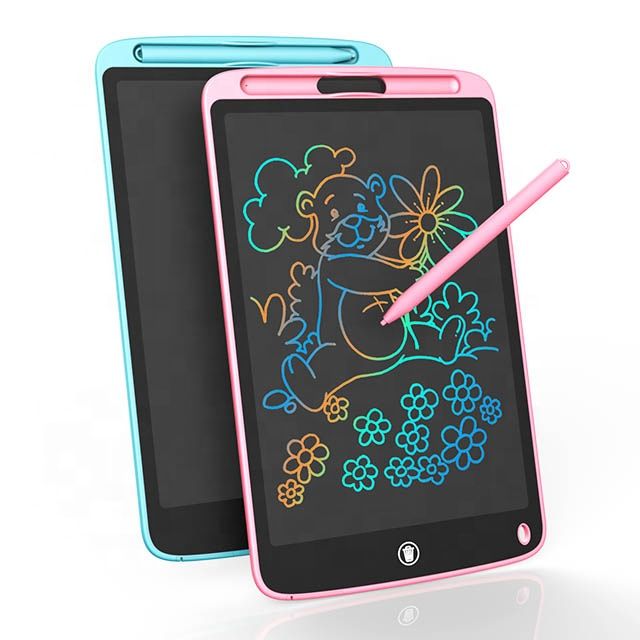
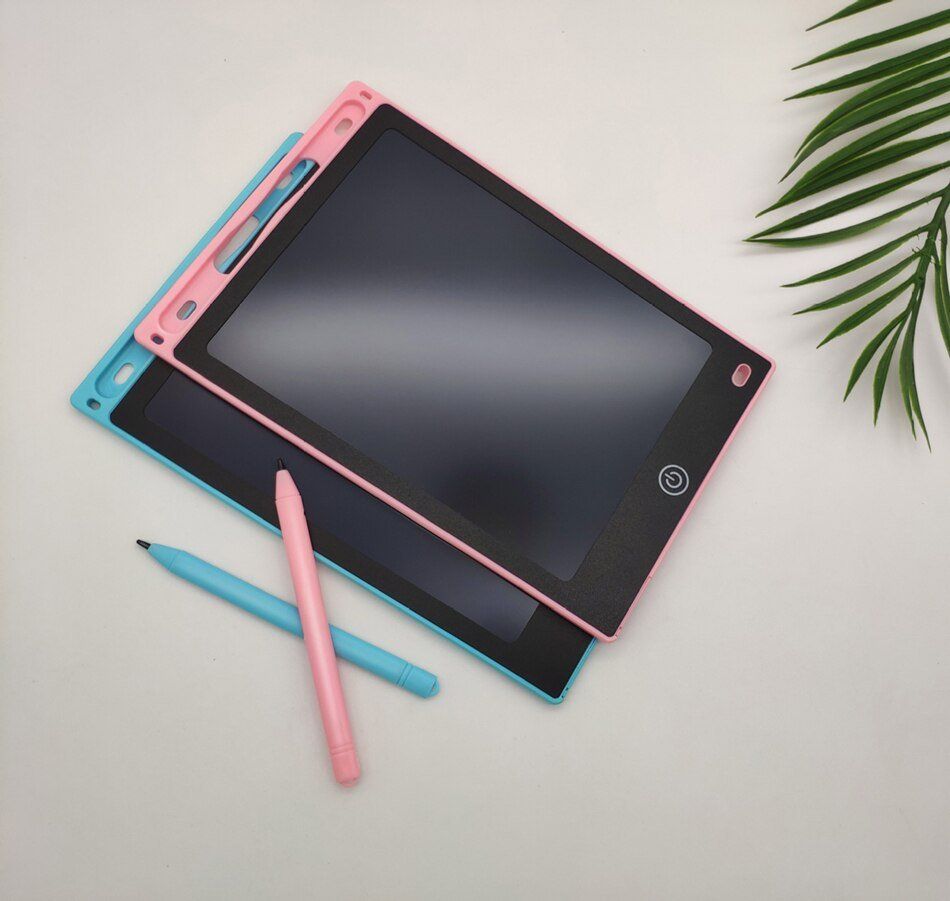
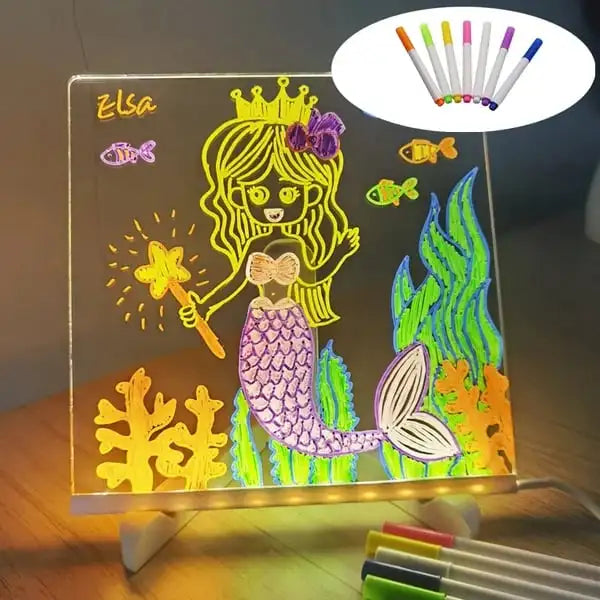
- Drawing tools. Chunky crayons, washable markers, and mess-free options like a reusable water drawing mat, where water-pen drawings fade as they dry so your child can start again.
- Play dough and child-safe scissors. Rolling, squishing and snipping strengthen small hand muscles.
Toys for language: questions, stories and conversation
Three is the age of "Why?" Every question is a chance to talk. Toys that set up stories give your child something to describe, explain and invent.
- Picture books with a simple plot. Ask "What's happening here?" and "What do you think happens next?"
- Felt boards and puppets. Let your child move the characters while you both tell the story.
- Small-world play. A farm, a dollhouse or a road mat with a few figures gives kids a stage for narration.
- Songs and rhymes. Clapping games and silly rhyming songs build listening and sound awareness.
A useful habit: when your child asks "why," try turning it back sometimes. "Hmm, why do you think the ice melted?" You'll hear some wonderful theories.
Toys for thinking and social play: pretend, rules and turn-taking
Pretend play gets richer at 3. Children take on roles, play with friends, and invent rules. This is where pretend kitchens, dress-up and simple games shine.
- Pretend kitchen sets. A gourmet cooking set for kids with pots, utensils and play food lets your child run a restaurant, cook for teddy, or host a picnic. Name ingredients, count plates, and take orders.
- Dress-up and role play. Doctor kits, capes, aprons and hats. Role play helps children practice how other people think and feel.
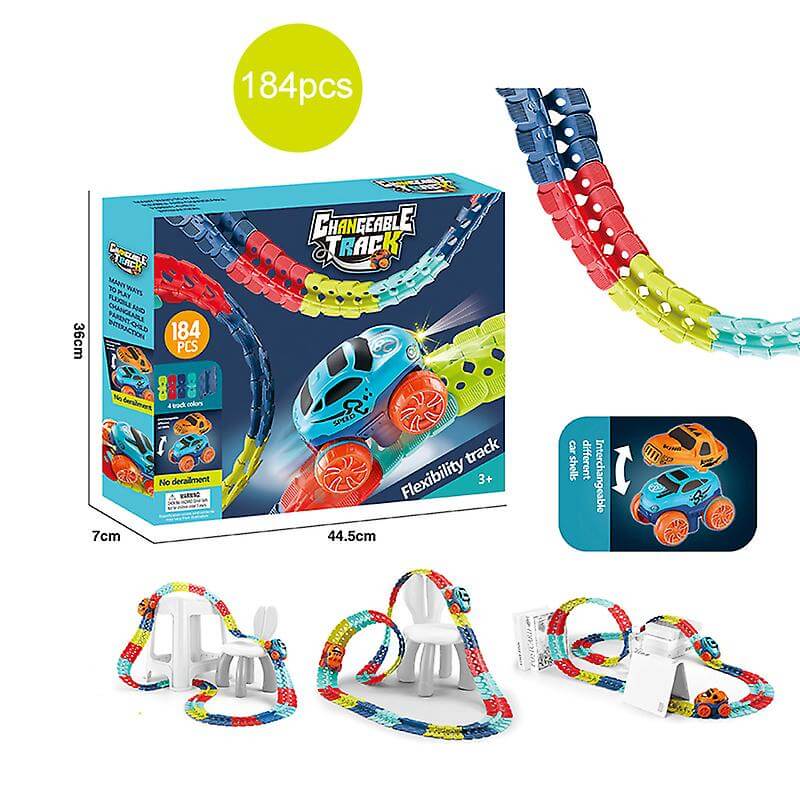
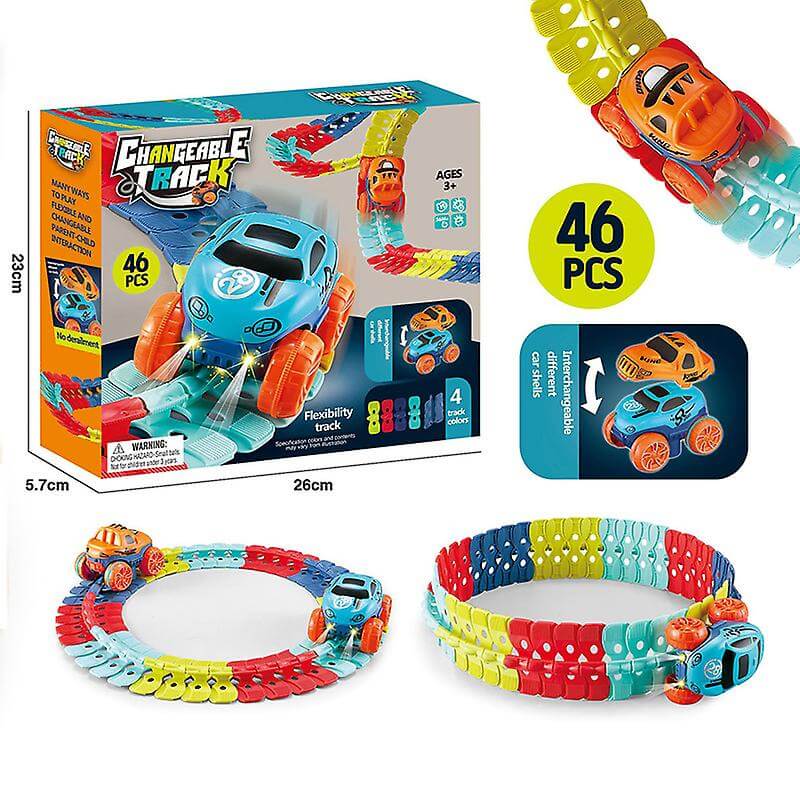
- Vehicle and track sets. A Car Track set with themed pieces lets children build a route and then play out a story along it. Some pieces are small, so supervise and keep it away from under-3s.
- First board games. Look for games with no reading, short turns and luck rather than strategy, like simple color-matching or memory games. They teach turn-taking and coping with losing.
- Open-ended loose parts. Blocks, scarves, boxes and cups become whatever the story needs.
The AAP's Power of Play article notes that pretend play builds creativity, negotiation and cooperation. You'll see all three the first time two 3-year-olds argue over who gets to be the chef.
Skill-by-skill toy guide for 3-year-olds
| Skill area | What you might see (3–4 years) | Toy types that fit | Play idea |
|---|---|---|---|
| Gross motor | Climbing, pedaling, throwing at a target | Soft climbing sets, tricycle, bean bags, fort kits | Bean-bag toss into numbered baskets |
| Fine motor | Drawing circles, threading large beads, dressing | Magnetic tiles, lacing beads, shape matching, play dough | Build a tile "house" for a favorite toy animal |
| Language | Back-and-forth talk, "why" questions, describing actions | Story books, felt boards, puppets, small-world sets | Ask your child to tell teddy what happened today |
| Thinking and social | Joining other kids, role play, simple rules | Pretend kitchen, dress-up, track sets, first board games | Run a pretend restaurant with a menu you draw together |
What to skip (or wait on) at age 3
- Toys labeled 4+, 6+ or 8+. A higher age label often means smaller parts, sharper edges, more heat or more complexity. Some race track sets in our store, for example, are labeled 4+.
- Balloon toys. The CPSC advises that children under 8 shouldn't play with uninflated balloons without supervision. Balloon-powered cars are better a few years from now.
- Small, loose magnets. Magnetic building sticks and small magnetic pieces are riskier than large tiles. If your child still mouths toys, wait.
- 3D pens and hot tools. Even low-temperature pens need close adult help and steady hands. Most families do better waiting until 5 or 6.
- Remote-control drones and fast RC cars. They need coordination 3-year-olds are still building, and they tend to end in frustration.
- Toys that only light up and talk. At this age, a toy should give your child something to do, build or pretend.
A balanced toy shelf for a 3-year-old
If you're shopping for a birthday or reorganizing a playroom, aim for one or two items from each group:
- Build: blocks or magnetic tiles
- Pretend: a kitchen set, dress-up basket or dollhouse
- Create: crayons, paper, play dough and a drawing mat
- Move: a tricycle, balls or a soft climbing set
- Think: puzzles of 12 to 24 pieces, matching games, a first board game
- Read: a rotating stack of library books
Rotate what's out every week or two. Our post on independent play has ideas for setting up a space your child can use on their own, and our list of indoor activities for kids helps on rainy days.
Frequently asked questions
What are the best toys for 3-year-olds?
Building sets like blocks or magnetic tiles, pretend kitchens and dress-up, drawing and play dough, simple matching games, and toys for climbing and riding cover the key skills of this age. Choose open-ended toys that can be part of many different stories.
Can my child use 3+ toys the day they turn 3?
The label allows it, but watch your child, not the calendar. If they still put toys in their mouth, wait and supervise. If younger siblings are around, keep small pieces in a separate space.
Are magnetic tiles OK for 3-year-olds?
Large magnetic tiles are a popular 3+ building toy because the magnets are sealed inside big pieces. Check them regularly and throw out any tile that is cracked or has a loose magnet. Small loose magnets are a different matter, so keep those away.
How many board games should a 3-year-old play?
One or two simple games is plenty. Look for short games with no reading and lots of luck, and expect to bend the rules at first. The real goal is learning to take turns.
My 3-year-old won't play with other kids. Is that normal?
Many 3-year-olds warm up slowly, and some prefer one friend at a time. Short, low-pressure playdates help. If you have concerns about social skills or development, talk to your pediatrician.
The bottom line
Three is when play gets social, chatty and imaginative. The best toys give your child something to build, a role to play, a story to tell, and room to move. Use the 3+ label as a safety guide, keep watching for mouthing and little siblings, and focus on a small set of open-ended toys. When your child is ready for more complex projects, our guide to the best toys for 5- and 6-year-olds shows what comes next.
You can browse more options in our toys for ages 3–9 collection.