Fine Motor Skills and School Readiness: Why Little Hands Matter for Reading and Math

Quick answer: Fine motor skills, the small, precise movements of the hands and fingers, are one of the best early predictors of how children do at school. Large studies have found that kindergarten fine motor skills predict later math, reading and science achievement, with predictive power similar to attention. The skill that matters most is visual-motor control: looking at a shape and reproducing it with the hand, as in copying, drawing and building. The good news is that these skills grow quickly with everyday, playful practice.
Key takeaways
- Using several large longitudinal datasets, researchers found fine motor skills are a strong predictor of later achievement, about as strong as attention for math (Grissmer et al., 2010).
- In 213 children, fine motor skills (especially copying designs) and executive function both predicted kindergarten achievement and improvement across the year (Cameron et al., 2012).
- Fine motor and thinking skills develop together: copying a design uses planning, attention and working memory.
- Drawing, threading beads, using tweezers, play dough and copying shapes are all simple ways to practise.
What are fine motor skills?
Fine motor skills involve small muscles in the hands, fingers and wrists working together with the eyes. Examples include holding a crayon, turning pages, buttoning a coat, threading a bead, cutting with scissors and placing a small piece exactly where it needs to go. Researchers often split them into two parts: fine motor coordination (the movement itself) and visual-motor integration (matching what the eyes see with what the hand does, as when copying a triangle).
What does the research say about fine motor skills and later achievement?
For years, school readiness was measured mainly by early reading and counting. In 2010, a team led by David Grissmer at the University of Virginia re-examined six large longitudinal datasets and published their results in Developmental Psychology. Using the three datasets that included motor measures, they found that fine motor skills were an additional strong predictor of later achievement. Fine motor skills and attention had similar predictive strength for math, while attention was a little stronger for reading. They also found that a child's general knowledge of the world strongly predicted later science scores.
The authors concluded that attention, fine motor skills and general knowledge together predicted later math, reading and science better than early math and reading scores alone. It is a striking finding for parents: building with hands and exploring the world are not "extras" but part of being ready to learn.
Which fine motor skills matter most?
Claire Cameron and colleagues followed 213 children, measuring their fine and gross motor skills at ages 3 and 4 before kindergarten, then their executive function and academic achievement during kindergarten. In Child Development, they reported that higher executive function and higher fine motor skills, specifically design copying, both predicted higher achievement on several tests at the start of kindergarten and greater improvement from autumn to spring. The two skills were distinct, which means each adds something unique.
Why would hand skills affect math and reading?
Researchers suggest several reasons, which likely work together:
- Classroom demands: early learning involves a lot of drawing, writing, cutting and manipulating objects. Children with easier hand control can focus on the lesson rather than on the pencil.
- Shared brain systems: copying a shape requires planning, attention and working memory, the same executive functions used in problem solving.
- Spatial thinking: visual-motor tasks practise judging size, position and orientation, which connect to number and geometry.
- Handwriting fluency: forming letters automatically frees up mental energy for spelling and composing.
A useful overview of these mechanisms is Cameron et al. (2016), How are motor skills linked to children's school performance and academic achievement?
Is this proof that fine motor practice raises grades?
The strongest findings are predictive (they follow children over time), not proof that practice alone raises test scores. Grissmer's team noted that few interventions had directly tested this. Still, the consistency of the links, plus the fact that fine motor practice is enjoyable and has no downside, makes it a sensible priority in the preschool years.
Fine motor milestones (rough guide)
- Around 2 years: scribbles, stacks several blocks, turns pages.
- Around 3 years: copies a circle, threads large beads, uses play dough tools.
- Around 4 years: copies a cross and square, starts using scissors, draws a simple person.
- Around 5 years: copies a triangle, writes some letters, cuts along a line.
Every child develops at their own pace. If you have concerns, the CDC's developmental milestone checklists are a helpful starting point, and your paediatrician can advise.
15 fun activities that build fine motor skills
- Drawing and colouring with chunky crayons, then thinner pencils.
- Copying simple shapes and patterns (circle, cross, square, triangle).
- Threading beads or making bracelets.
- Squeezing, rolling and cutting play dough.
- Picking up small items with tongs or child-safe tweezers.
- Peeling and placing stickers.
- Tracing letters and numbers.
- Building with small blocks or magnetic pieces.
- Lacing cards and simple sewing.
- Puzzles with small knobs or pieces.
- Pouring water between cups.
- Buttoning, zipping and snapping clothes.
- Tearing paper for collages.
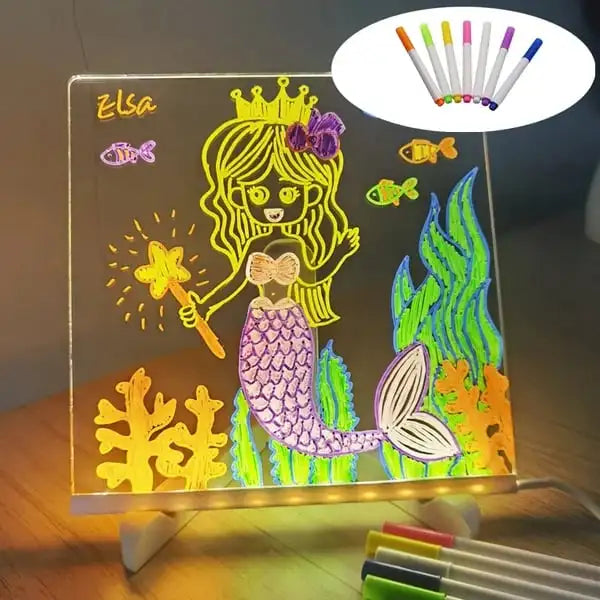
- Chalkboard or whiteboard drawing (vertical surfaces strengthen the wrist).
- Helping in the kitchen: stirring, spreading, sprinkling.
Tips for making practice stick
- Little and often: 10–15 minutes a day beats one long session.
- Prioritise copying: since design copying was the strongest predictor, include "copy my drawing" games.
- Keep it playful: the goal is engagement, not perfect letters.
- Praise effort and let children choose the activity.
Toys that build busy hands
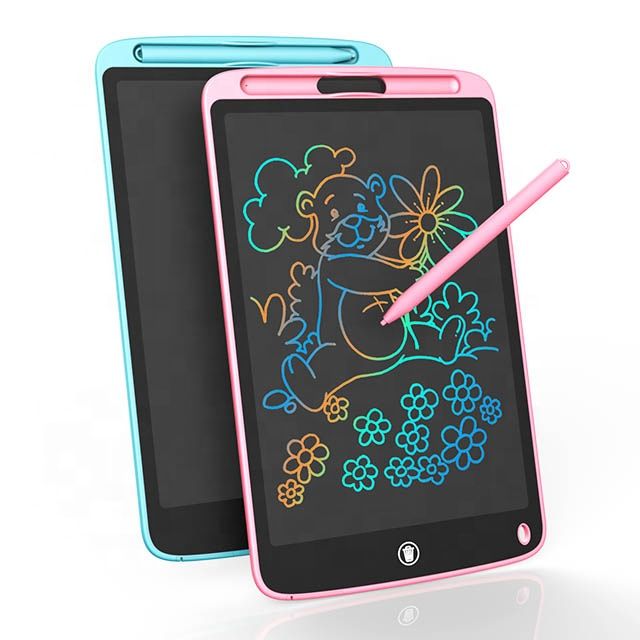
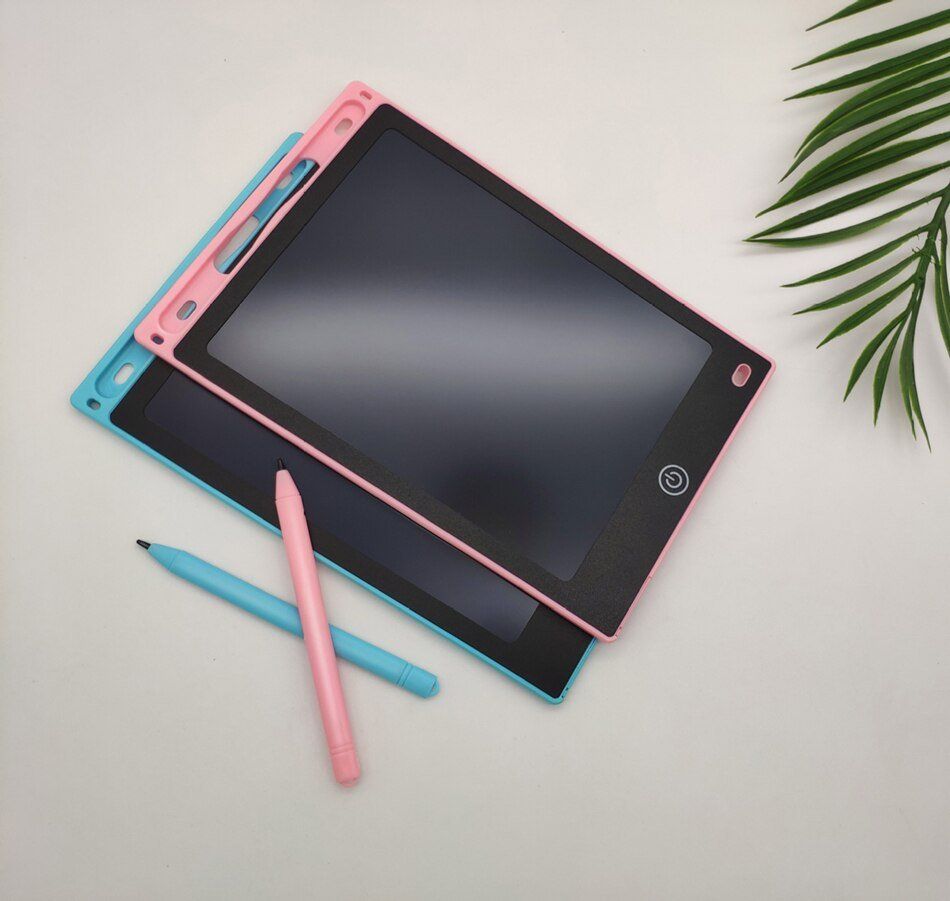
Try the Wooden Magnetic Chalkboard for drawing and early writing, the reusable Calligraphy Book for tracing letters and numbers, the DIY Bracelet Set for threading, the LCD Writing Pad, Diamond Painting and the Montessori DIY Felt Board.
Frequently asked questions
What is the difference between fine and gross motor skills?
Fine motor skills use small muscles in the hands and fingers; gross motor skills use large muscles for running, jumping and balance. Both matter, but fine motor skills have the clearer link to early academics.
When should my child hold a pencil correctly?
Most children develop a mature tripod grasp between about 4 and 6 years. Strengthening the hand through play usually helps more than drilling grip.
Do tablets help fine motor skills?
Tapping and swiping use different, simpler movements than drawing or building. Physical materials give richer practice, and screen time for young children is best kept limited.
Should I worry if my child dislikes drawing?
Not necessarily. Offer other hand activities such as building, play dough or threading. If difficulties persist, ask your paediatrician about an occupational therapy assessment.
References
- Grissmer, D., Grimm, K. J., Aiyer, S. M., Murrah, W. M., & Steele, J. S. (2010). Fine motor skills and early comprehension of the world: Two new school readiness indicators. Developmental Psychology, 46(5), 1008–1017. doi:10.1037/a0020104
- Cameron, C. E., Brock, L. L., Murrah, W. M., Bell, L. H., Worzalla, S. L., Grissmer, D., & Morrison, F. J. (2012). Fine motor skills and executive function both contribute to kindergarten achievement. Child Development, 83(4), 1229–1244. doi:10.1111/j.1467-8624.2012.01768.x
- Cameron, C. E., Cottone, E. A., Murrah, W. M., & Grissmer, D. W. (2016). How are motor skills linked to children's school performance and academic achievement? Child Development Perspectives, 10(2), 93–98. doi:10.1111/cdep.12168
- Centers for Disease Control and Prevention. Learn the Signs. Act Early: Developmental milestones. cdc.gov
This article is for general information and does not replace advice from your child's doctor, teacher or occupational therapist.