How Much Screen Time Is OK for Toddlers and Preschoolers? WHO and AAP Guidelines Explained

Quick answer: The World Health Organization (WHO) and the American Academy of Pediatrics (AAP) agree on the basics. Under 18–24 months: avoid screen time, except video calls with family. Ages 2 to 5: no more than 1 hour a day of high-quality content, ideally watched together, and less is better. The reason is not that screens are poison; it is that young children learn best through hands-on play, movement, sleep and back-and-forth conversation with caring adults, and screen time tends to crowd these out.
Key takeaways
- WHO (2019): no sedentary screen time for 1-year-olds; max 1 hour for ages 2–4, less is better.
- AAP (2016): avoid digital media (except video chat) under 18–24 months; limit to 1 hour of high-quality programming for ages 2–5, co-viewed with a parent.
- In 2,441 Canadian children, more screen time at ages 2 and 3 predicted lower developmental screening scores a year or two later, not the other way round (Madigan et al., 2019).
- Replace screen time with active play and "quality sedentary time": reading, storytelling, singing and puzzles.
What are the official screen time guidelines by age?
In April 2019 the WHO published its first guidelines on physical activity, sedentary behaviour and sleep for children under 5. In 2016 the AAP released its policy statement Media and Young Minds. Combined, they look like this:
| Age | Screen time | Activity and sleep (WHO) |
|---|---|---|
| Under 1 year | Not recommended (video chat is OK per AAP) | Active several times a day, including at least 30 min tummy time; 12–17 h sleep depending on age |
| 1 year | Not recommended (AAP: if introduced from 18 months, high-quality and together) | At least 180 min of varied physical activity; 11–14 h sleep |
| 2 years | Max 1 hour a day; less is better | At least 180 min physical activity; 11–14 h sleep |
| 3–4 years (AAP: to 5) | Max 1 hour a day; less is better | At least 180 min activity, 60 min of it energetic; 10–13 h sleep |
Why do experts recommend limiting screens for young children?
The AAP explains that children under 2 develop their thinking, language, motor and social-emotional skills through hands-on exploration and interaction with trusted caregivers. Very young children also struggle to transfer what they see on a 2D screen to the 3D world. The AAP links excessive media use in the first five years with shorter sleep, weight gain and poorer self-regulation, and warns against using screens to calm children.
The WHO frames it as a whole-day balance: replace prolonged sitting in front of screens with active play, protect sleep, and when children are sitting, make it interactive time with a caregiver, such as reading, storytelling, singing and puzzles.
Does screen time actually affect development?
A major study in JAMA Pediatrics followed 2,441 children in Calgary, Canada, at 24, 36 and 60 months. Mothers reported screen time and completed a standard developmental screening questionnaire covering communication, motor skills, problem solving and social skills. Higher screen time at 24 and 36 months was associated with poorer screening scores at 36 and 60 months. Importantly, the reverse was not found: children with lower scores did not go on to get more screen time. The effects were modest, and the study could not judge content quality, but it supports the idea that heavy screen use can take time away from activities that drive development.
Is all screen time equally bad?
No. Both the AAP and researchers stress how screens are used. Video chatting with grandparents is interactive and social. High-quality educational programmes watched together, with a parent talking about what is on screen, are far better than solo, fast-paced or advert-heavy content. The bigger concern is displacement: every hour on a screen is an hour not spent moving, talking, sleeping or playing hands-on.
What should children do instead of screens?
The AAP's Power of Play report describes play as "brain building" and notes that real-time social interaction and play are better for learning than digital media. Research on pretend play adds detail: in a randomised study of 110 preschoolers, a five-week fantastical pretend-play programme improved executive functions such as attention-shifting and working memory (Thibodeau et al., 2016).
Great screen-free swaps include:
- Active play: obstacle courses, ball games, dancing, ride-on toys, train tracks they can build and push.
- Pretend play: kitchens, dens and tents, dress-up, small-world play.
- Construction: blocks, magnetic tiles, puzzles.
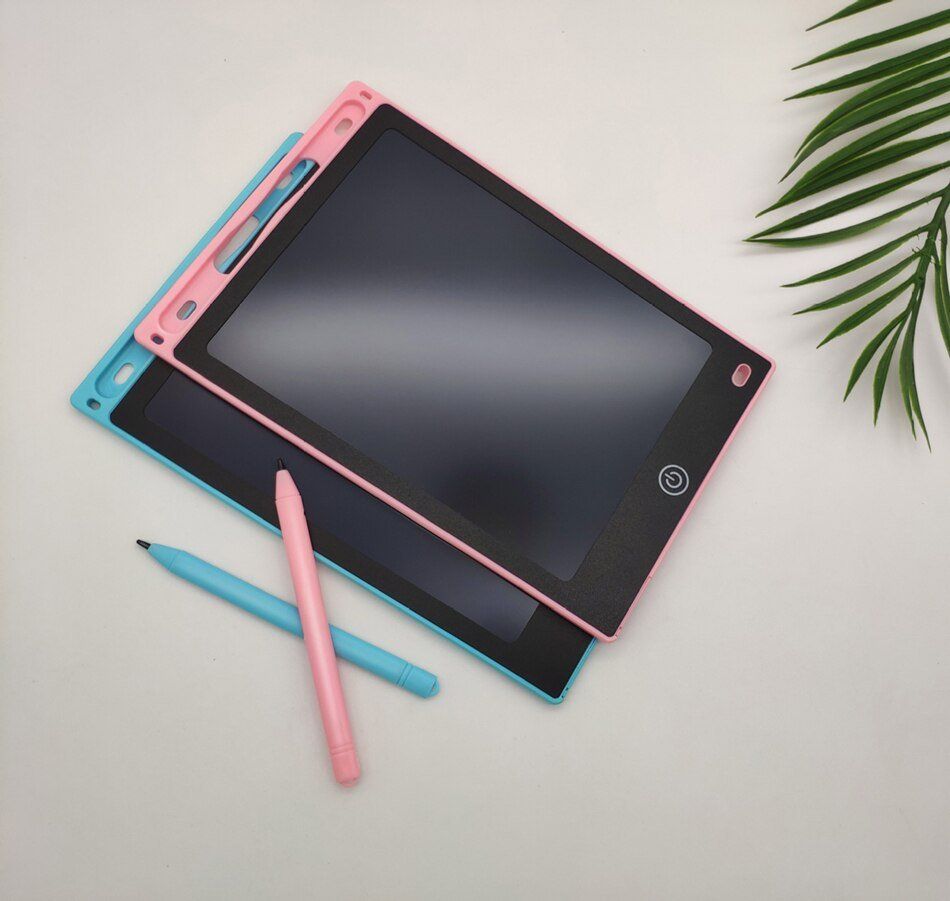
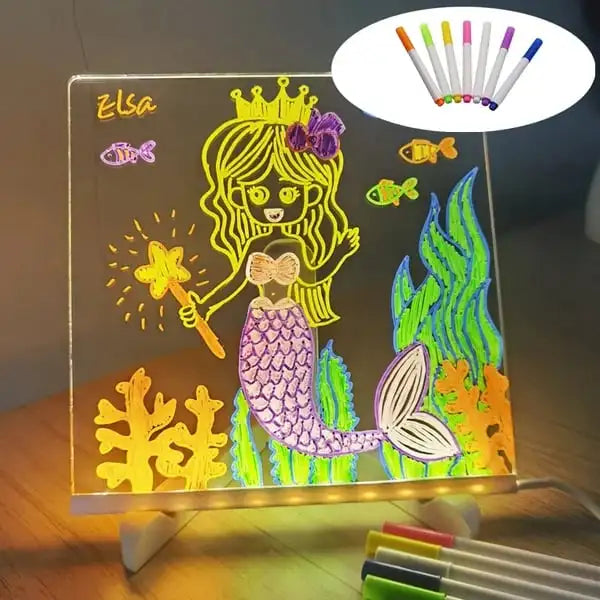
- Creative play: drawing boards, play dough, stickers, craft kits.
- Quiet time: picture books, audio stories, singing together.
- Exploration: nature walks, magnifiers and pocket microscopes, water play.
Practical tips to cut screen time without battles
- Make a family media plan with clear times and places for screens; the AAP offers a free Family Media Plan tool.
- Screen-free zones: meals, bedrooms and the car for short trips.
- No screens in the hour before bed to protect sleep.
- Set up "yes spaces": a basket of toys and books within easy reach.
- Use a timer so the end of screen time is predictable.
- Co-view when screens are used, and talk about what you see.
- Model it: children copy adults' phone habits.
- Don't use screens as the main calming tool; try a cuddle, song or sensory toy.
Screen-free toys we love
For active play try the Tumble Train and the Car Track; for pretend play the Gourmet Cooking Set and Tent Building Kit; for curious minds the Kids Pocket Microscope. Browse by age: 0–2 years, 2–3 years and 3–9+ years.
Frequently asked questions
Is video calling with family counted as screen time?
The AAP makes an exception for video chatting, even for babies, because it is interactive and social.
Are educational apps OK for toddlers?
Under 18–24 months, experts advise avoiding them. For ages 2–5, choose high-quality content, keep within 1 hour a day, and use it together.
My child already watches more than an hour. Is it too late?
No. Reduce gradually, swap in appealing hands-on activities and protect sleep. Small, consistent changes work best.
Does background TV count?
Background TV can reduce parent-child conversation and distract play, so the AAP recommends turning it off when no one is watching.
References
- World Health Organization (2019). Guidelines on physical activity, sedentary behaviour and sleep for children under 5 years of age. who.int
- AAP Council on Communications and Media (2016). Media and Young Minds. Pediatrics, 138(5), e20162591. doi:10.1542/peds.2016-2591
- Madigan, S., Browne, D., Racine, N., Mori, C., & Tough, S. (2019). Association between screen time and children's performance on a developmental screening test. JAMA Pediatrics, 173(3), 244–250. doi:10.1001/jamapediatrics.2018.5056
- Yogman, M., et al. (2018). The Power of Play. Pediatrics, 142(3), e20182058. doi:10.1542/peds.2018-2058
- Thibodeau, R. B., Gilpin, A. T., Brown, M. M., & Meyer, B. A. (2016). The effects of fantastical pretend-play on the development of executive functions: An intervention study. Journal of Experimental Child Psychology, 145, 120–138. doi:10.1016/j.jecp.2016.01.001
This article is for general information and does not replace advice from your child's doctor.